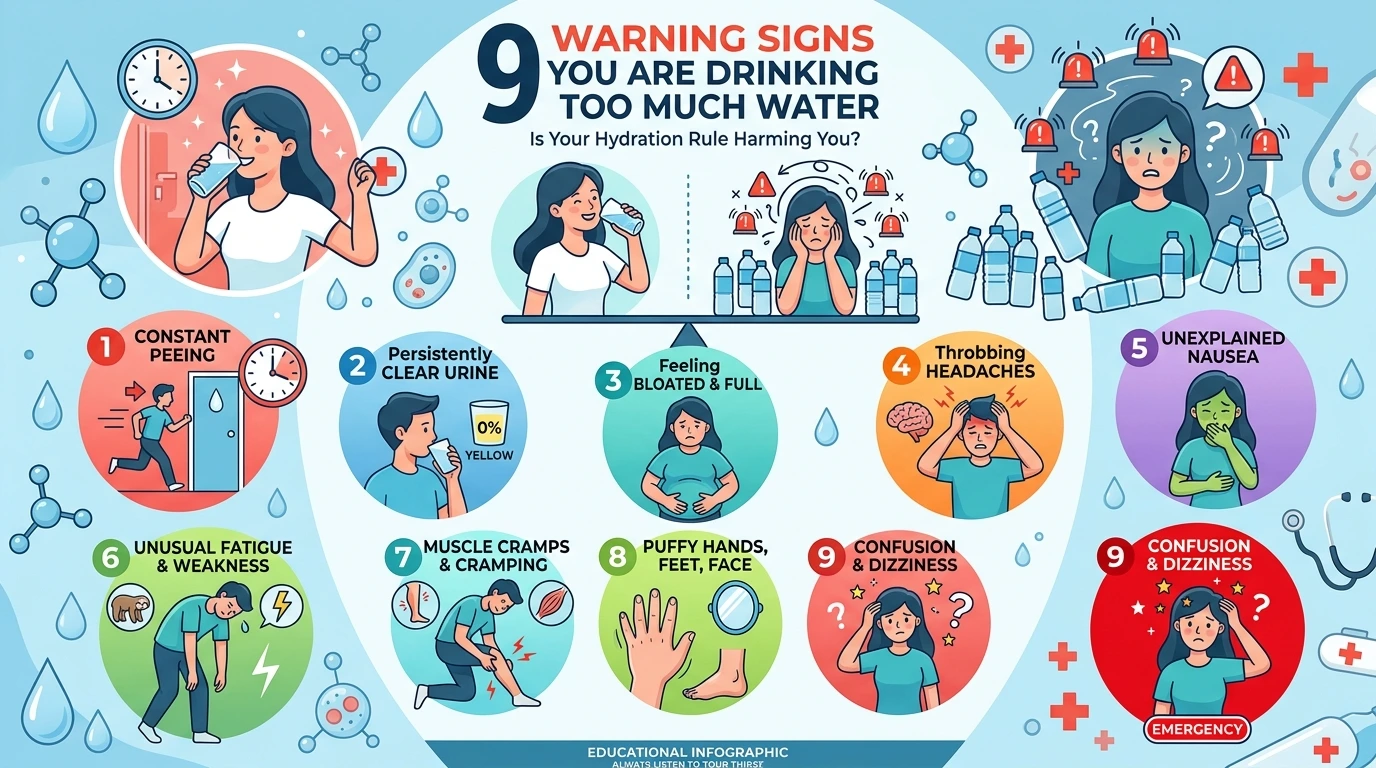
Drinking enough water is essential for good health, but consuming excessive amounts can sometimes be harmful. When your body cannot remove excess water quickly enough, sodium levels in your blood may drop, causing a condition called hyponatremia.
Some warning signs resemble everyday health problems, making them easy to overlook. Understanding the possible symptoms, risk factors, and safe hydration habits can help you recognize when something may be wrong.
Quick Key Takeaways
- Excessive water intake can dilute blood sodium and cause hyponatremia.
- Possible warning signs include nausea, headaches, weakness, and confusion.
- Clear urine and frequent urination alone do not confirm overhydration.
- Water requirements vary with activity, weather, and individual health.
- Severe confusion, seizures, or reduced consciousness require emergency medical attention.
What Happens When You Drink Too Much Water?
Your body maintains a careful balance of water and electrolytes, including sodium, which helps regulate fluid levels inside and around cells.
Drinking excessive amounts of water, particularly over a short period, can overwhelm your body’s ability to eliminate the extra fluid. This may dilute blood sodium, potentially causing cells to swell.
Severe hyponatremia can affect brain function and become life-threatening. The risk depends on how much and how quickly you drink, as well as your kidney function, medications, and underlying health conditions.
9 Signs You Might Be Drinking Too Much Water
1. You’re Urinating More Frequently
Frequent bathroom visits may occur when you drink more fluid than your body needs. However, caffeine, medications, diabetes, and other medical conditions can also increase urination.
Notice whether the change began after you increased your water intake. Persistent frequent urination deserves medical evaluation rather than automatically being attributed to overhydration.
2. Your Urine Is Consistently Clear
Urine color can provide a rough indication of hydration. Pale yellow urine is common with adequate hydration, while darker urine may indicate that you need more fluids.
Consistently clear urine may reflect recent water intake, but it does not prove that you’re drinking too much. Consider your overall fluid intake and other symptoms rather than relying on color alone.
3. Your Stomach Feels Bloated or Uncomfortably Full
Drinking a large volume of water quickly can stretch your stomach and cause temporary fullness or discomfort.
This feeling may improve as your stomach empties. Try drinking at a comfortable pace instead of forcing yourself to finish a particular amount. Persistent or severe abdominal discomfort may have another cause and should be assessed.
4. You Develop a Headache
Headaches can result from stress, poor sleep, illness, dehydration, or many other causes. However, a headache following unusually high water intake may be a warning sign of a sodium imbalance.
Pay particular attention if it occurs alongside nausea, vomiting, or unusual weakness. A sudden, severe headache or one accompanied by confusion requires urgent medical assessment.
5. You Feel Nauseated or Vomit
Nausea and vomiting can occur in people with hyponatremia, although these symptoms are not specific to overhydration.
If you develop persistent nausea after drinking excessive amounts of water, seek medical advice. Repeated vomiting or worsening symptoms should not be dismissed as a minor digestive problem.
6. You Experience Unusual Weakness or Fatigue
Feeling tired after physical activity is normal, but new or unexplained weakness may sometimes accompany low blood sodium.
Fatigue alone cannot establish whether your sodium level is abnormal. If weakness develops after excessive fluid intake, particularly with a headache or nausea, seek prompt medical advice.
7. You Develop Muscle Cramps
Muscle cramps can result from exercise, muscle fatigue, sweating, or electrolyte disturbances.
Excessive water intake may contribute to a sodium imbalance in certain circumstances, but cramps alone do not confirm overhydration. Severe cramps accompanied by other symptoms after heavy fluid intake warrant medical assessment.
8. Your Hands or Face Look Puffy
Unexplained puffiness may be associated with changes in fluid balance, but it is not a reliable standalone sign of excessive water consumption.
Medication effects and kidney, heart, or other medical conditions can also cause swelling. If puffiness persists or repeatedly returns, consult a healthcare professional, particularly if you have an existing condition that affects fluid regulation.
9. You Feel Confused or Unusually Drowsy
Confusion, disorientation, or reduced alertness can indicate a serious medical problem, including severe hyponatremia.
Call your local emergency service immediately if someone develops severe confusion, a seizure, or reduced consciousness, particularly after excessive water intake. Do not attempt to correct a suspected serious sodium imbalance at home.
How Much Water Is Too Much?
There is no single daily amount that is excessive for everyone. Your fluid requirements depend on your age, activity level, climate, diet, and medical history.
You may encounter estimates suggesting that healthy kidneys can eliminate approximately 0.8–1 liter of water per hour. However, this is only a rough estimate, not a guaranteed safe limit. The body’s ability to remove excess water varies and may be reduced by illness, medications, or hormonal changes.
The most important precaution is to avoid drinking large amounts of water rapidly or forcing yourself to meet an arbitrary daily target.
Is the Eight-Glasses-a-Day Rule a Myth?
Eight glasses of water daily is a popular guideline, not a universal requirement.
Your total water intake includes drinking water, other beverages, and moisture from foods such as fruits, vegetables, and soups. Needs can increase during hot weather or prolonged physical activity.
For many healthy adults, thirst is a useful guide. However, thirst may be less reliable in some older adults and people with certain medical conditions.
Rather than following a rigid target, consider your individual needs and any medical advice you have received.
Can Drinking Too Much Water During Exercise Be Dangerous?
Yes. Excessive fluid intake during prolonged physical activity can contribute to exercise-associated hyponatremia, particularly when someone drinks more fluid than their body loses.
Both dehydration and overhydration can be harmful during endurance exercise. Avoid forcing yourself to drink large quantities at regular intervals regardless of thirst, and follow appropriate hydration guidance for your activity.
If you develop a headache, nausea, vomiting, or unusual confusion during or after prolonged exercise, seek medical assessment rather than assuming you are dehydrated.
Who Is More at Risk of Overhydration?
Certain factors can make it harder for your body to maintain a healthy fluid balance, including:
- Kidney disease: Reduced kidney function may limit the removal of excess water.
- Heart or liver disease: These conditions can affect how the body manages fluid.
- Certain medications: Some medicines can increase the risk of low blood sodium.
- Hormonal conditions: Problems affecting water regulation can interfere with the body’s normal balance.
- Prolonged physical activity: Excessive drinking during endurance exercise can increase the risk of hyponatremia.
If you have a condition that affects fluid balance, follow your healthcare professional’s recommendations instead of changing your intake based on general online advice.
How Is Overhydration Diagnosed?
Symptoms alone cannot confirm overhydration or hyponatremia because many have other possible causes.
A healthcare professional may review your symptoms, recent fluid intake, medications, and medical history. Blood tests can measure sodium levels, while urine tests may help assess how your body is regulating water.
Treatment depends on the underlying cause and severity. Suspected significant hyponatremia should not be treated with salt supplements or drastic fluid restriction without medical supervision.
How to Stay Hydrated Without Overdoing It
A few practical habits can help you maintain a healthy fluid balance:
- Drink at a comfortable pace: Avoid consuming unusually large volumes in a short period.
- Respond to thirst: Adjust your intake when exercising or spending time in hot weather.
- Avoid rigid water targets: Your needs can change from day to day.
- Follow medical guidance: If you have a prescribed fluid limit or target, stick to your clinician’s recommendations.
- Be mindful during prolonged exercise: Avoid drinking more fluid than your body needs.
Frequently Asked Questions
Can drinking too much water damage your health?
Yes. Excessive water intake can dilute blood sodium and cause hyponatremia. Severe cases may affect the brain and become life-threatening.
Is clear urine a sign of overhydration?
Not necessarily. Clear urine can reflect recent fluid intake, but urine color alone cannot diagnose overhydration.
Can drinking water too quickly cause hyponatremia?
Yes. Consuming excessive amounts over a short period can overwhelm the body’s ability to remove water, especially in susceptible individuals.
Should I stop drinking water if I think I’ve had too much?
Avoid forcing yourself to drink more than you need. If significant symptoms develop after excessive intake, seek medical advice rather than attempting to treat the problem yourself.
Does everyone need eight glasses of water daily?
No. Fluid requirements vary according to individual circumstances, and foods and other beverages contribute to total water intake.
Final Thoughts
Water is essential for health, but maintaining the right balance matters more than drinking as much as possible. Frequent urination, clear urine, headaches, and nausea can have several causes, so consider the full picture instead of relying on a single symptom.
Drink according to your needs, take extra care during prolonged exercise, and seek medical help if concerning symptoms develop. Severe confusion, seizures, or reduced consciousness require emergency care.
Medical Disclaimer: This article is intended for general educational purposes only. It is not a substitute for professional medical advice, diagnosis, or treatment.